
Paper Apostille
The UK Legalisation Office can attach an apostille to an eligible UK document after checking the relevant signature, stamp or seal.
Need to use a UK document overseas? We help you identify the appropriate legalisation route, including FCDO apostille, solicitor or notary preparation and embassy legalisation where required.

“Legalisation” can describe several different steps. The correct route depends on the document, the country where it will be used and the exact instructions of the receiving authority.
The UK Legalisation Office can attach an apostille to an eligible UK document after checking the relevant signature, stamp or seal.
An electronic apostille is available for some eligible electronically signed documents. It is not available for every document type or every overseas requirement.
Some destination countries or receiving authorities require a further embassy or consular step after the UK apostille has been issued.
Many official UK documents can be legalised directly, while other documents may first need to be certified by a UK solicitor or notary.
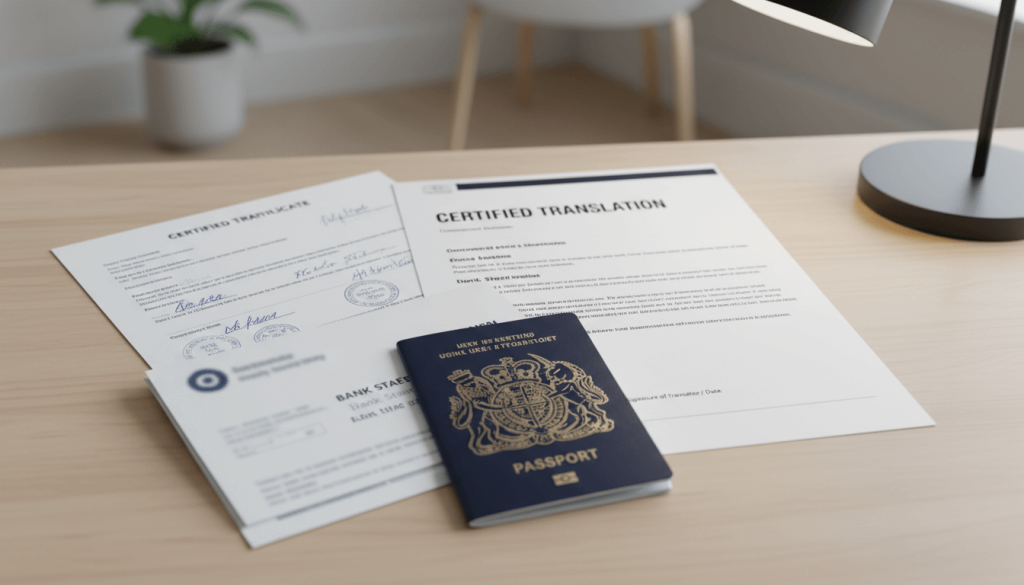
Not every document can go straight to the Legalisation Office. The form of the document and the signature or seal on it determine whether another certification step is required first.
Both are official UK legalisation routes, but the document and overseas recipient determine which format is appropriate.
| Question | Paper apostille | e-Apostille |
|---|---|---|
| Format | Physical apostille attached to the relevant document. | Electronic apostille supplied as part of a digitally legalised PDF. |
| Document submission | Physical documents are submitted for the paper route. | The document must meet the electronic-signature and eligibility requirements. |
| Suitable for all documents? | Used for many physical UK documents, subject to eligibility. | No. Several document categories are excluded from the e-Apostille route. |
| What should you check? | Ask the receiving authority which apostille format it accepts before proceeding. | |
Start with the overseas requirement rather than adding certification steps automatically.
Provide a clear scan and tell us the destination country and receiving authority.
The document format, certification requirement and legalisation route can then be reviewed.
You can be told what needs to be supplied and which additional steps apply before processing begins.
The appropriate apostille, certification or embassy route can then be completed and the documents returned.
If the overseas authority also requires the document in another language, the original document and the translation do not necessarily follow the same legalisation route.
The overall timeline depends on the document, the required certification route and whether additional embassy or consular legalisation is involved.
Official FCDO processing times can also change. If you are working towards a visa, employment, study, property, court or registration deadline, include the date when you send your documents.

Document legalisation is easier when the required route is checked before originals are posted or additional certification is purchased.
Review the document form and requirements before the legalisation process moves forward.
Certification, apostille and embassy steps can be considered together where the overseas requirement calls for them.
Know which document to send and whether an original or appropriately certified copy is required.
Send your initial documents online and follow the appropriate physical-document route where originals are needed.
No. The requirement depends on the destination country and the receiving authority. Ask the organisation requesting the document whether legalisation is required and which format it accepts.
The Legalisation Office checks an eligible signature, stamp or seal against its records. When it can be verified, an apostille is attached to legalise the document for the relevant overseas use.
Sometimes. Certain documents can use an appropriately certified copy, while others require the original. The receiving authority may also specify who must certify the document.
No. e-Apostille eligibility is restricted. Some documents, including General Register Office certificates and certain police or disclosure certificates, require another route.
No. An apostille is UK legalisation issued through the Legalisation Office. Some countries or authorities require an additional embassy or consular step after the apostille.
Translation and legalisation are separate requirements. The overseas authority may want the original legalised first, or it may specify additional certification for the translated document. See our apostille translation service for the translation-specific route.
The UK Legalisation Office does not legalise documents issued outside the UK. Those documents normally need to follow the legalisation process of the country where they were issued.
Send a clear copy, the destination country and any instructions from the receiving authority so the required certification and legalisation steps can be identified.