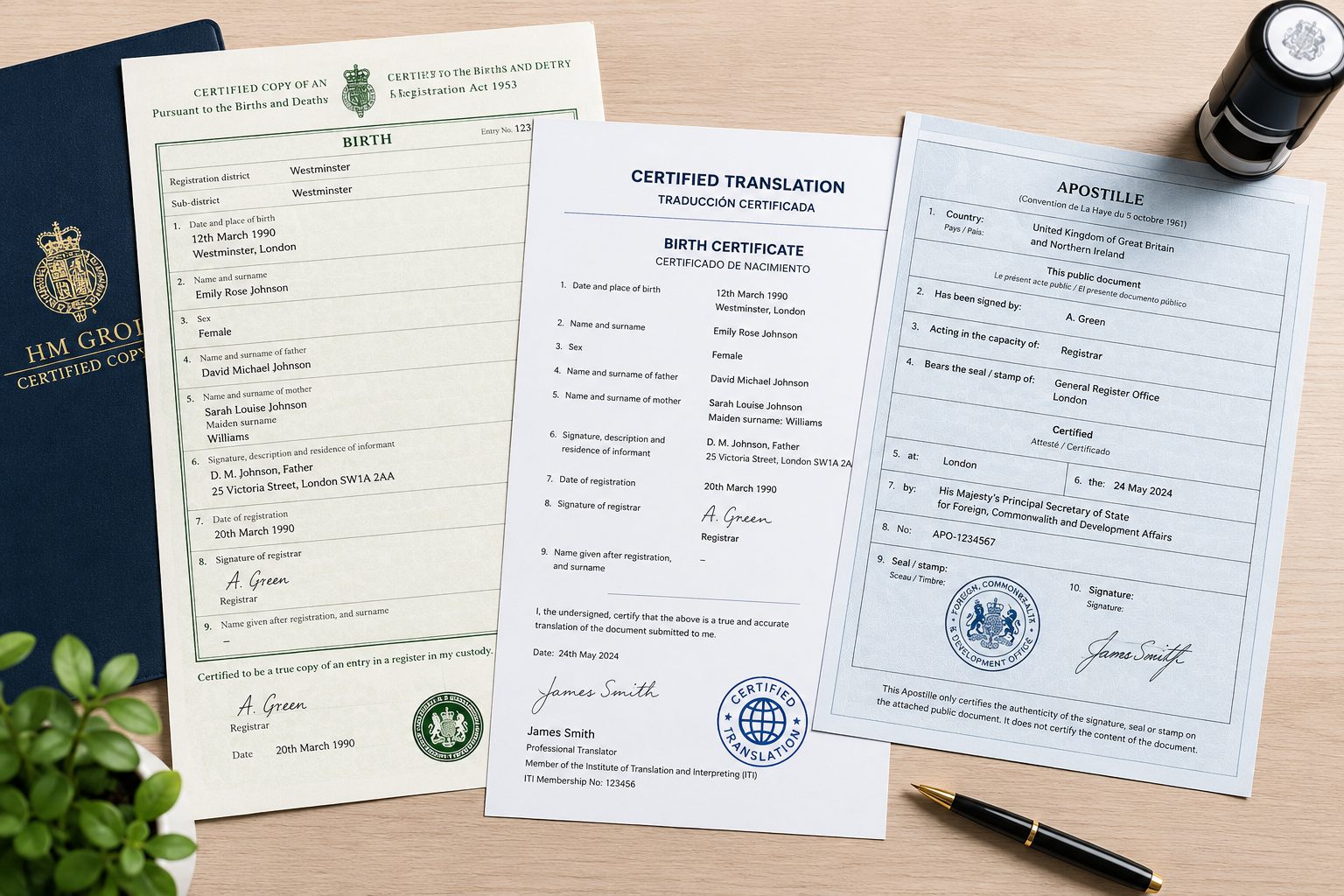
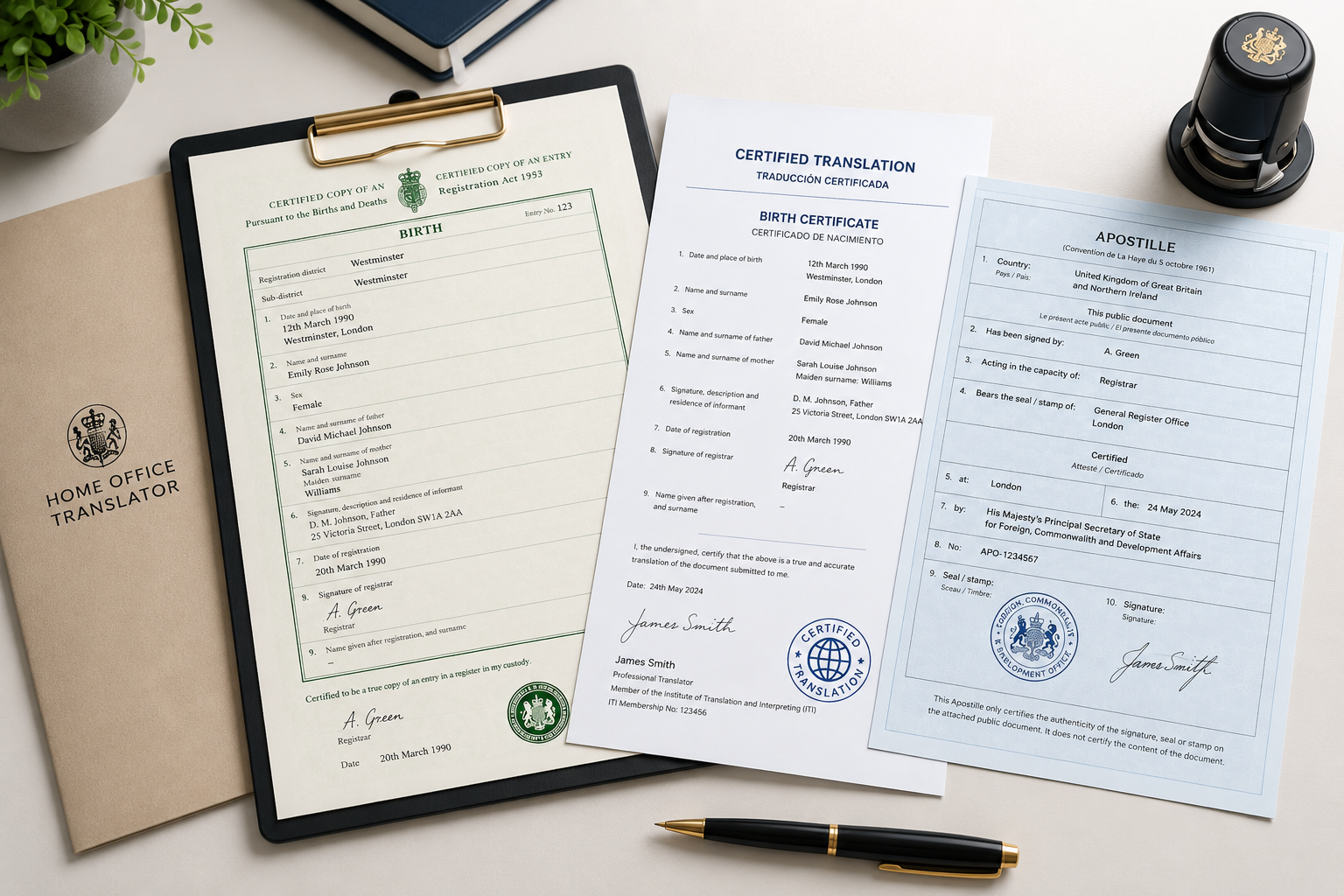
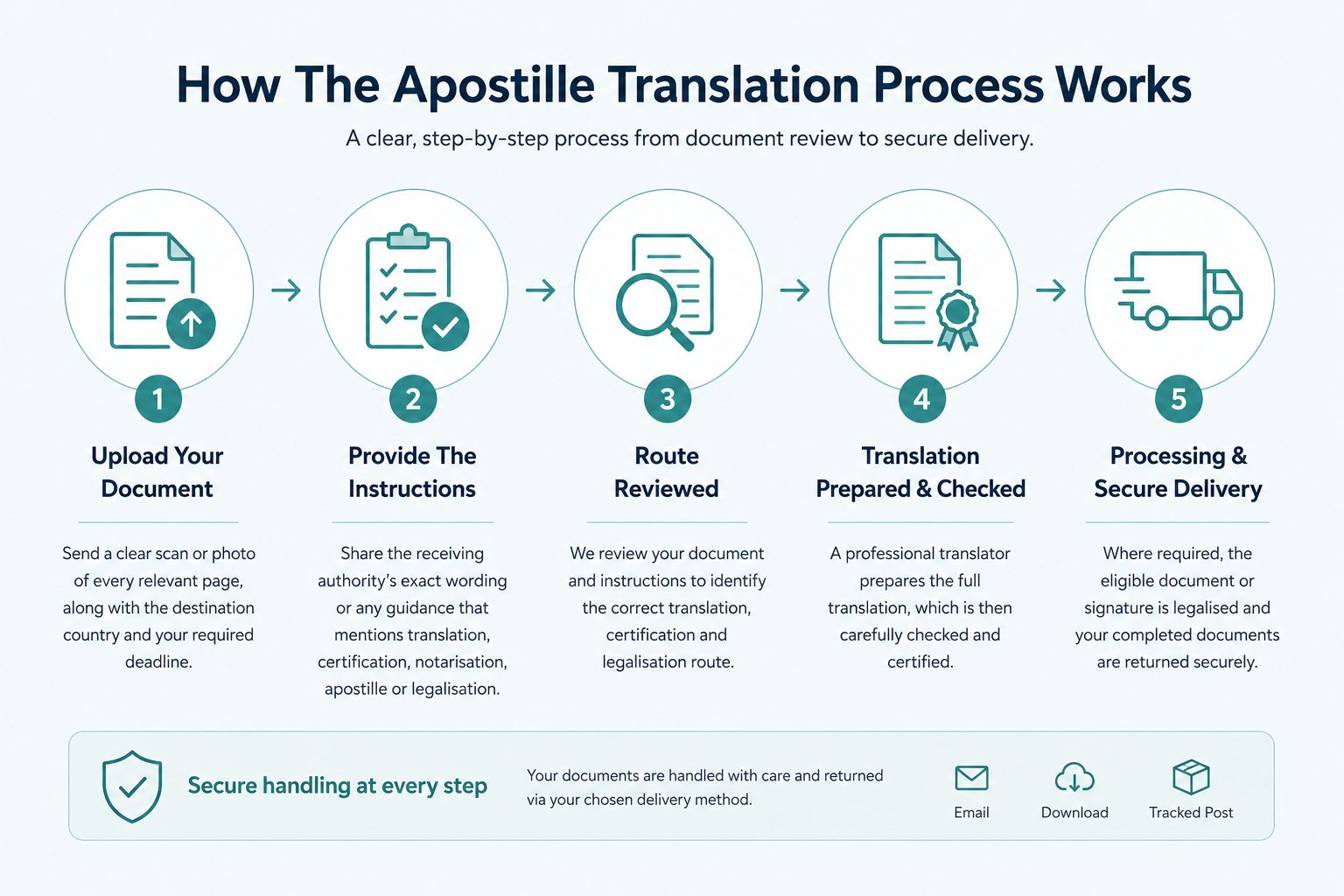
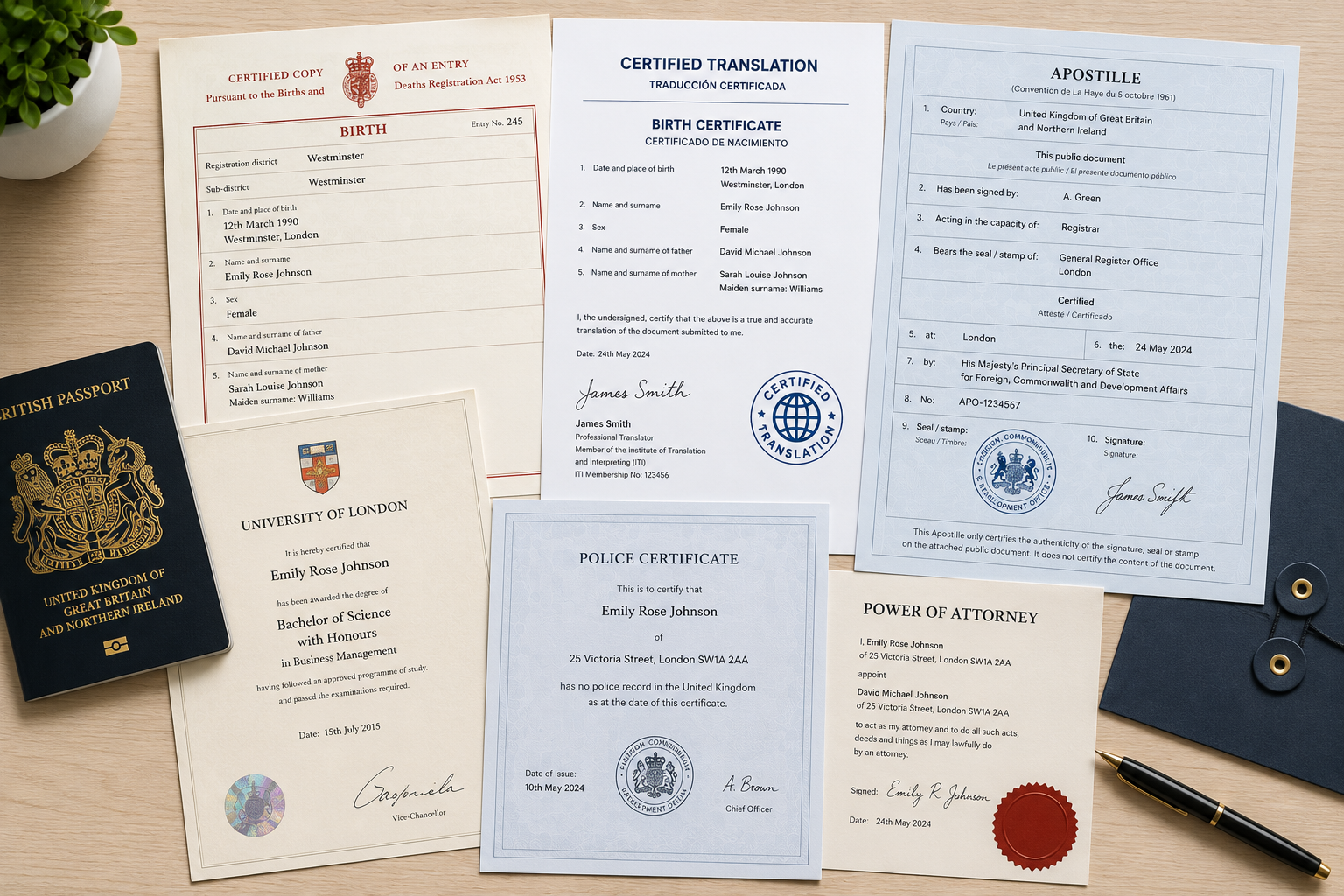
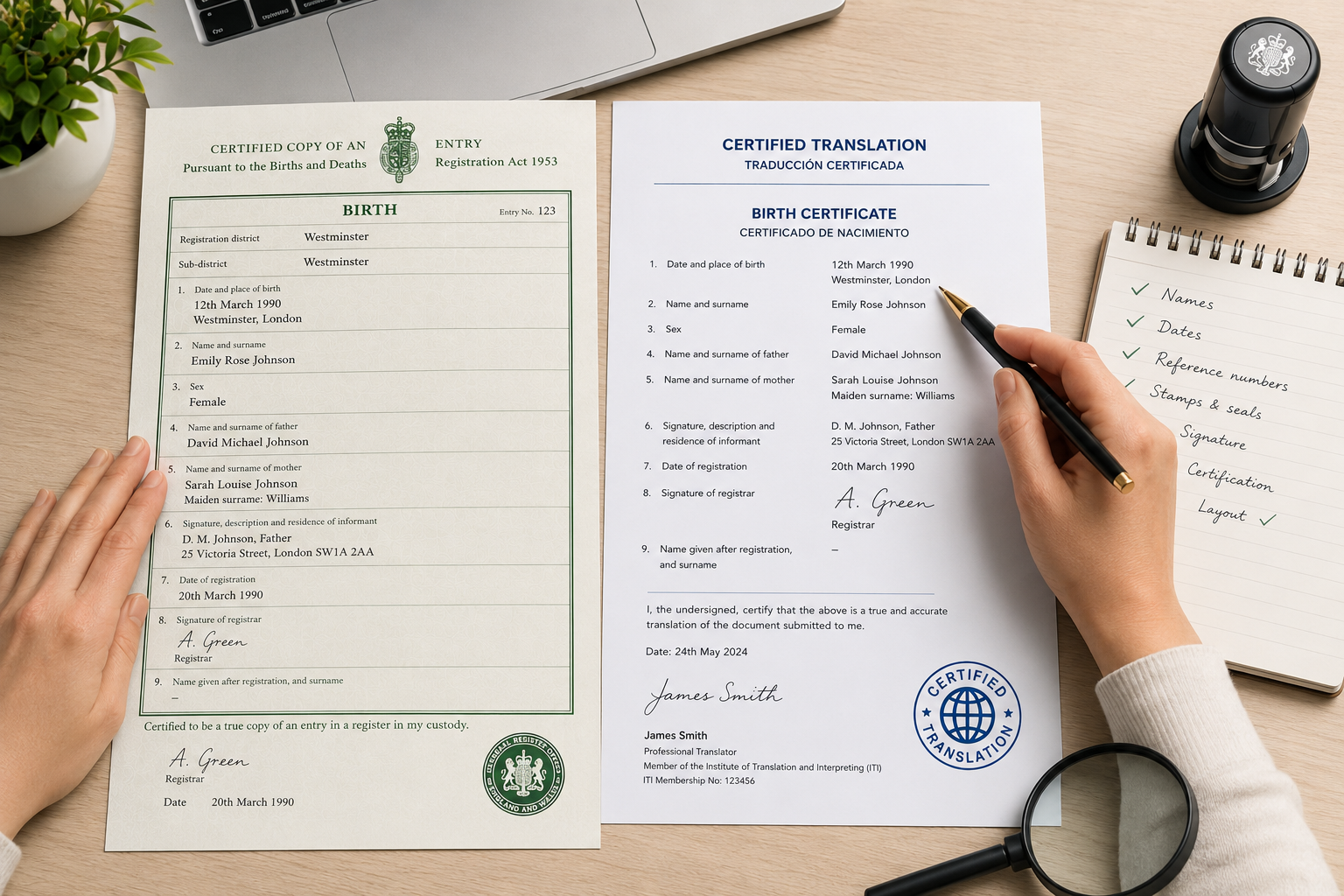
“Apostille translation” is commonly used to describe a translated document that also needs official authentication for use in another country. Translation, certification, notarisation and apostille legalisation are separate steps.
A certified translation communicates the document's content in the required language and includes a statement confirming that the translation is accurate and complete. An apostille serves a different purpose: it authenticates an eligible official signature, stamp or seal connected with a UK document.
The apostille does not certify that the translation itself is accurate. The receiving authority decides which document or signature must be authenticated and whether the original document should be apostilled before translation.
The order matters.
Some organisations want the original UK document apostilled first and translated afterwards. Others may require a certified or notarised translation whose relevant signature can then be legalised. Send the authority's exact instruction whenever possible.